Many organizations traditionally view occupancy intelligence through the narrow lens of space utilization, primarily focusing on understanding how many people utilize a space on average. While essential for basic space management, this approach often overlooks a critical dimension: workplace effectiveness. Understanding how employees interact with and experience their workspaces is paramount to fostering engagement, productivity, and overall satisfaction.
Our customer, a forward-thinking corporate real estate leader in a Global 2000 technology company, recognized this gap. They sought to move beyond simply knowing "how many people are where" to understanding "how well their spaces truly serve their purpose."
To address this, our client partnered with Occuspace to leverage AI enabled occupancy analytics, specifically focusing on the often-overlooked metric of dwell time. Dwell time measures the duration individuals spend in a particular space, offering a powerful proxy for:
• Engagement Levels: How long are employees actively using a space?
• Activity Patterns: Does the space facilitate its intended use?
• Team Productivity: Are teams able to focus and collaborate effectively in their assigned areas?
By analyzing dwell time in conjunction with other metrics, our client aimed to gain a more holistic understanding of their workplace dynamics.
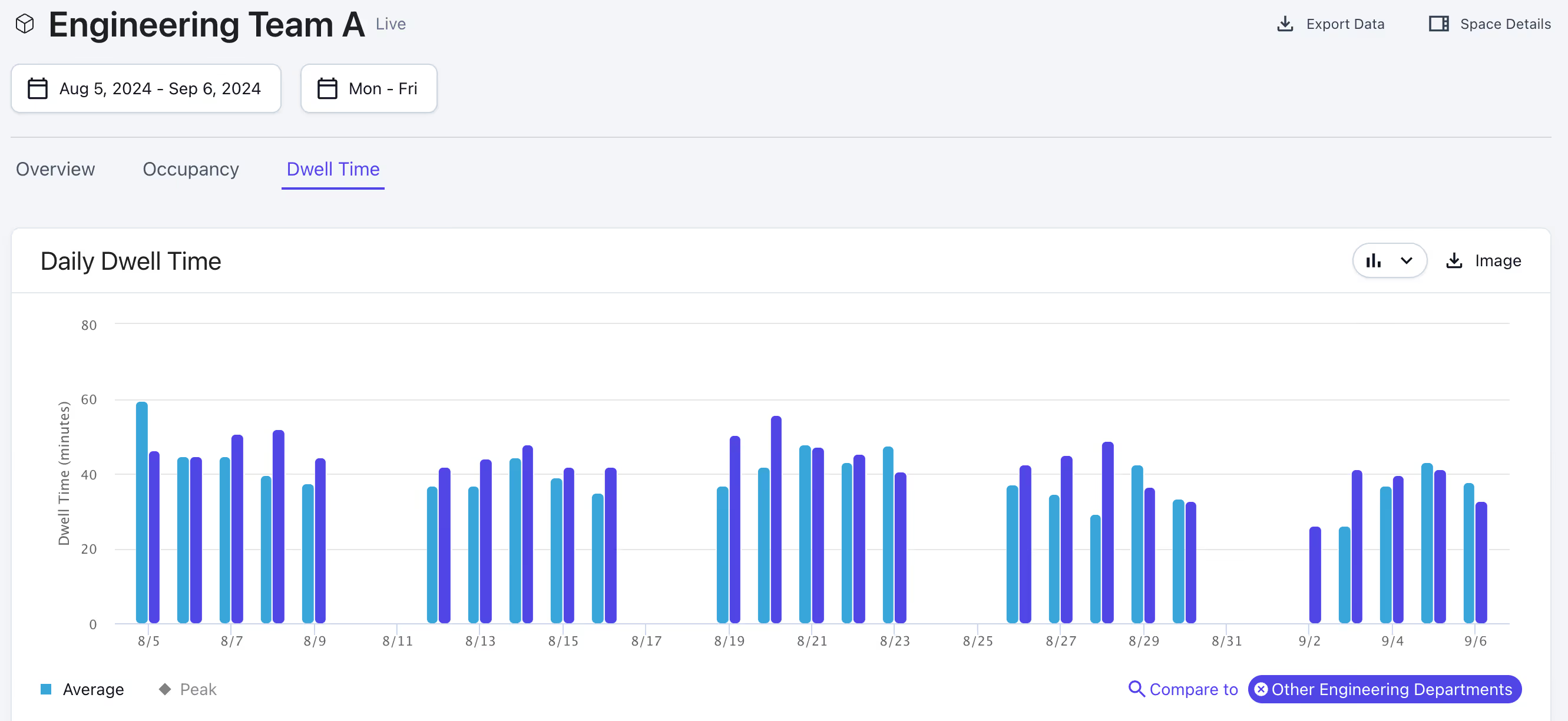
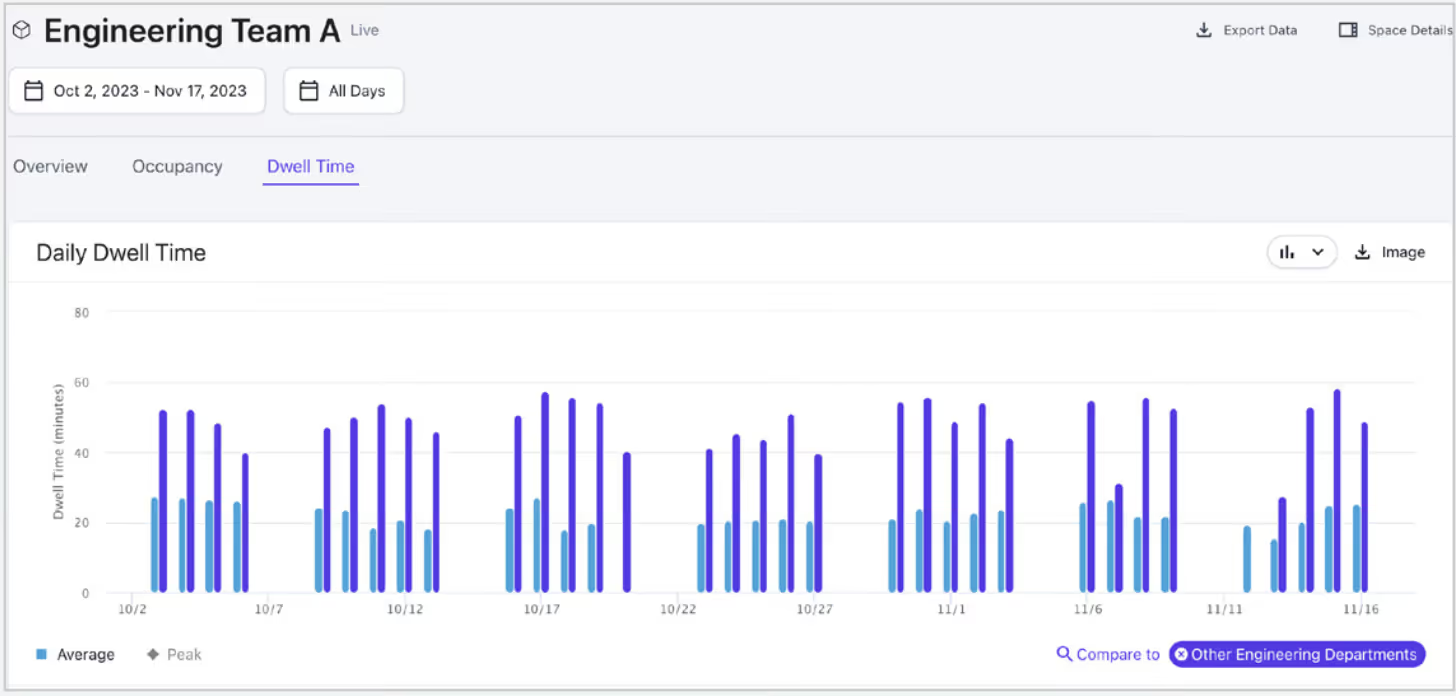
Occuspace's platform revealed a significant anomaly: Engineering Team A consistently exhibited 35% lower dwell time compared to other engineering teams within the same office building and across the broader portfolio. This stark difference immediately signaled a potential issue with the team's assigned workspace.
Further investigation, guided by dwell time data, quickly pinpointed the root cause: Engineering Team A was uniquely situated adjacent to a highly active and, consequently, noisy marketing team.
The low dwell time for the engineering team was a strong indicator that the excessive noise was creating a distracting and unproductive environment, directly impacting their ability to utilize their space effectively for focused work.
Armed with this clear, data-driven insight, the workplace leader confidently initiated targeted interventions:
• Sound-Blocking Partition Walls: To mitigate noise bleed from the marketing area, sound-blocking partition walls were installed.
• Dedicated Focus Spaces: Within Engineering Team A's neighborhood, dedicated focus spaces were added, providing quiet zones for concentrated work.
These changes were designed to directly address the identified distraction, allowing the engineering team to better utilize their workspace for its intended purpose.
The results of these strategic interventions were dramatic and immediate:
Dwell time for Engineering Team A nearly doubled, indicating a significant improvement in their ability to use their workspace effectively.
Employee sentiment scores for the team increased by 40%, reflecting a substantial boost in their satisfaction and perceived productivity.
This case study powerfully demonstrates how moving beyond basic space utilization to incorporating metrics like dwell time can uncover hidden challenges and unlock significant improvements in workplace effectiveness.
By leveraging data to understand the nuances of how employees interact with their environment, organizations can create spaces that truly support their workforce, leading to enhanced engagement and productivity.