NEWS: Selected by GSA to Optimize 180+M Sq Ft of Federal Real Estate
Read More












.gif)



Boards approve buildings when the utilization case is airtight. Multi-semester trend data shows which buildings are truly at capacity, and which to repurpose, before you commit to a 10-year program.
Multi-semester utilization trends per building
Build-vs-repurpose analysis grounded in measured demand
Evidence formatted for boards and capital committees


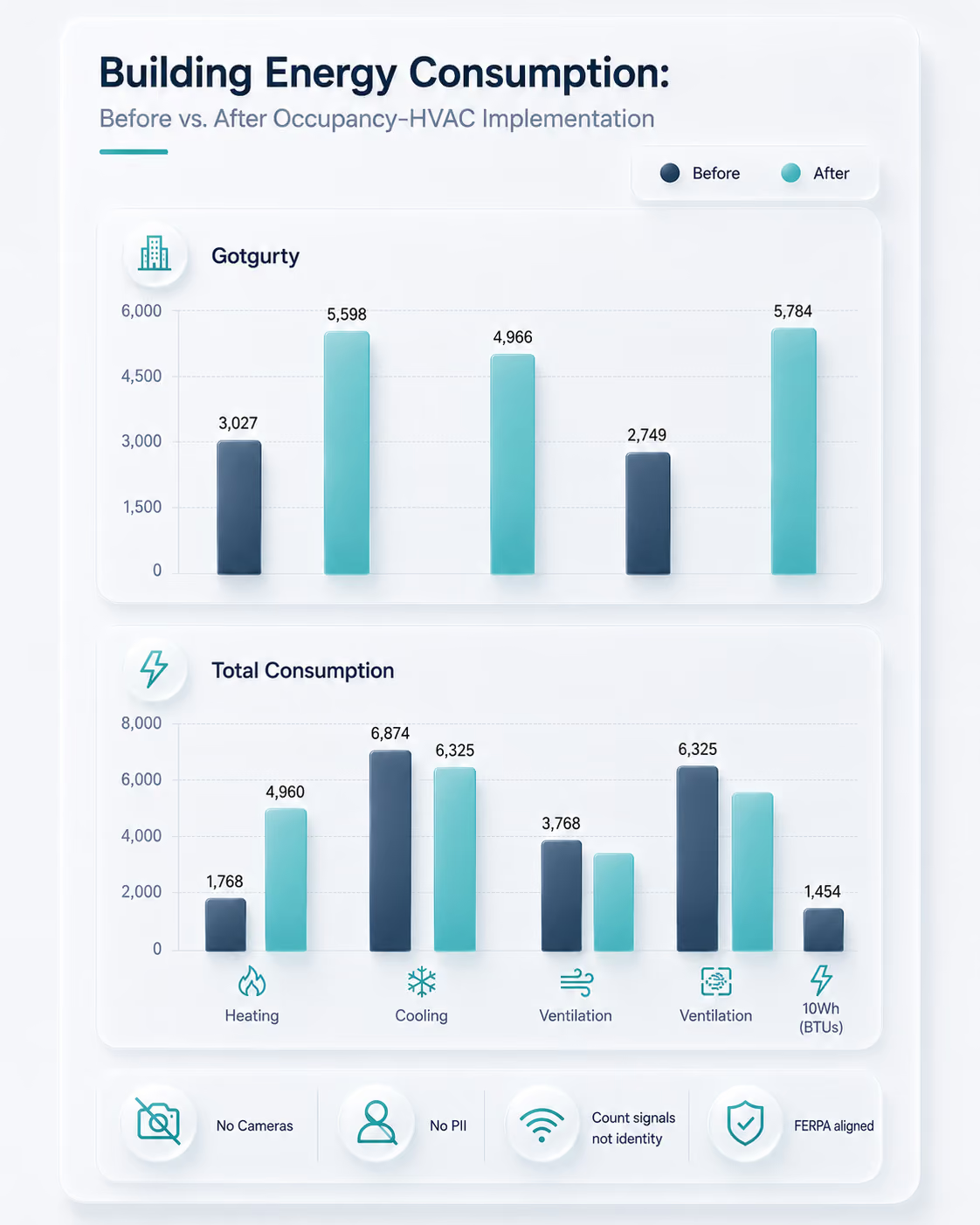

Occuspace sensors measure ambient Wi-Fi and Bluetooth signal activity to count how many people are in a space — no cameras, no images, and no personally identifiable information. Campuses get real-time and historical utilization for classrooms, libraries, study spaces, dining, recreation, and offices with 97% people-counting accuracy.
Occuspace collects no personally identifiable information and no student records, so the data it produces sits outside FERPA scope. Device identifiers are anonymized, and reporting is aggregate — how many people are in a space, never who they are.
Each sensor plugs into a standard 120-volt outlet and starts collecting data in minutes — no wiring, no construction, and no IT integration required to get started. Campuses typically go live building by building in days, not semesters.
Common uses include classroom and section scheduling informed by actual utilization, designing study spaces students actually use, allocating scarce office space fairly, matching HVAC and custodial schedules to real usage, meeting energy mandates with measurable data, and grounding capital planning in evidence instead of anecdote.
More than 100 higher education campuses use Occuspace for occupancy intelligence, from single libraries to institution-wide deployments. Live data is available in dashboards, alerts, and an API that feeds campus planning tools.


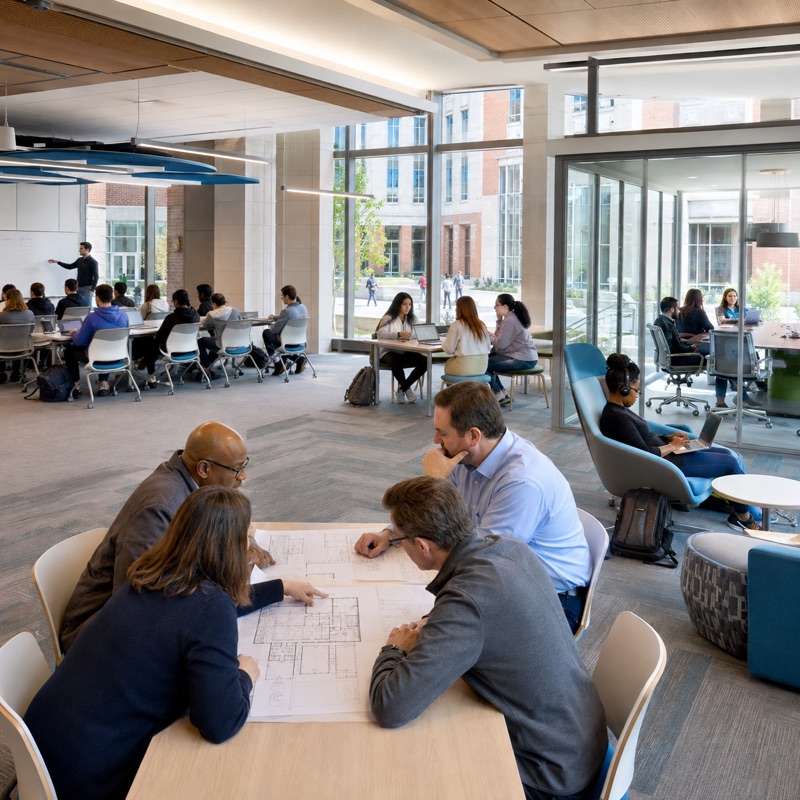
Facing a major capital investment and a post-COVID campus where hybrid work had made traditional space assumptions unreliable, VCU replaced resource-intensive walkthroughs with Occuspace sensor data – giving space planners the continuous, evidence-based occupancy intelligence needed to right-size their next building before a single dollar of construction is committed.
Preliminary findings showed: three of the four highest-capacity spaces were among the least utilized, averaging just 2–11% occupancy.
Labs and specialty spaces were the exception — consistently the highest peaks and most vibrant utilization patterns, revealing how consolidating smaller labs could help accommodate larger class sizes.
Office space utilization was lighter than expected. With 20–25% average utilization, the data confirmed that post-COVID hybrid schedules had fundamentally changed when and whether people showed up.
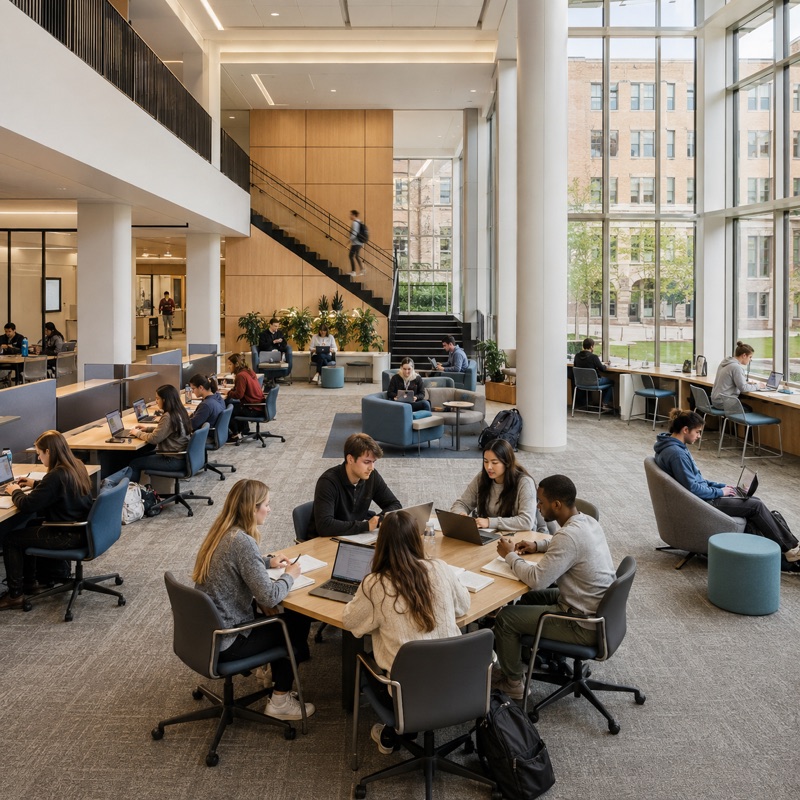
With enrollment increasing, Purdue's libraries needed approximately 60% more seating just to reach the median for peer institutions.
Data-informed renovations doubled second-floor utilization from 20% to 40% and increased third-floor utilization from 19% to 51%, with average student dwell times reaching 94 and 143 minutes, respectively.
Purdue achieved these gains with modest funding and no major construction, relocating approximately 68–70% of the print collection and investing in targeted improvements to furniture, lighting, carpet and paint.



