Read More
Industry — Federal
Compliant by Design. Secure by Default.
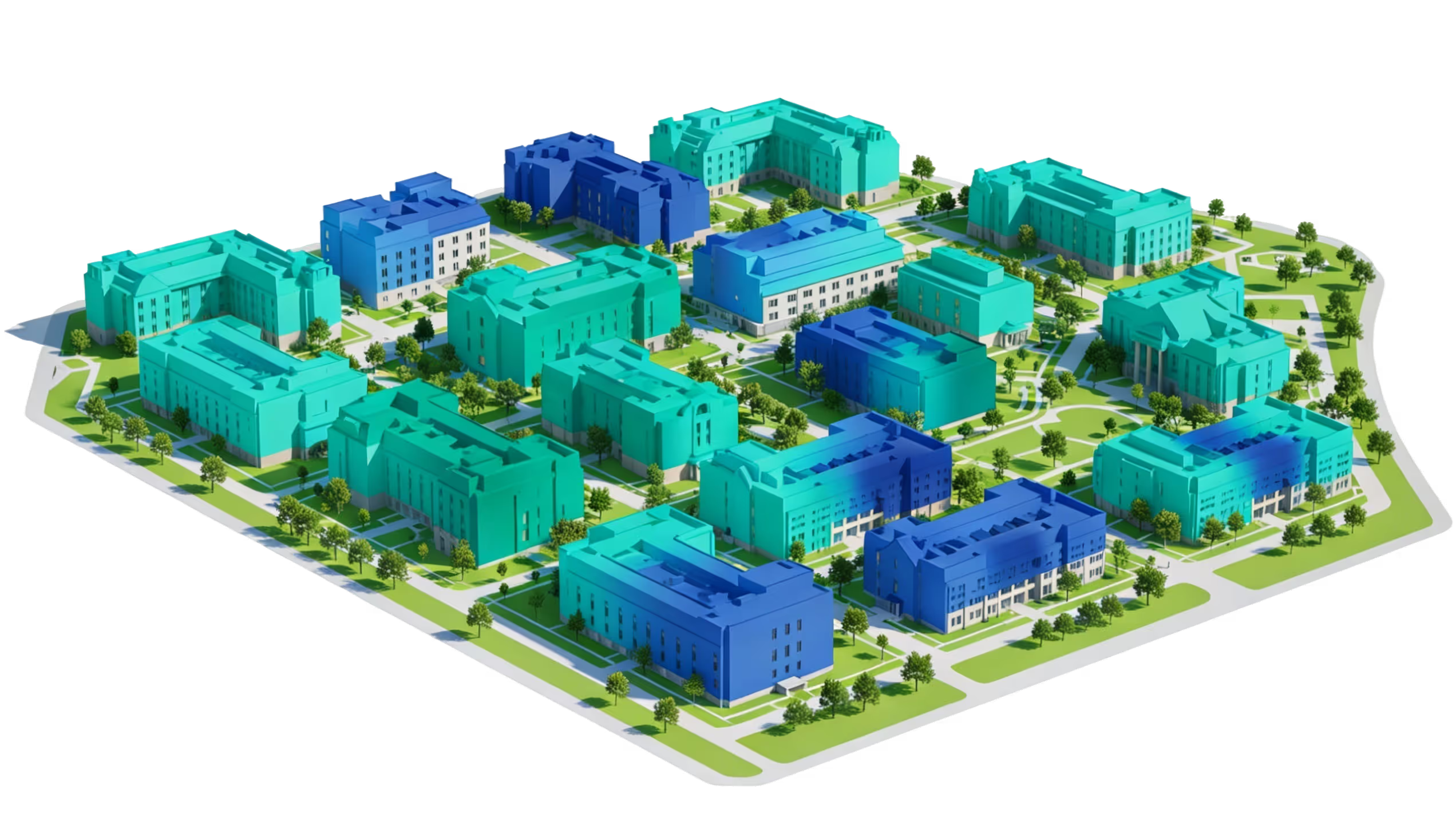
Federal agencies face a unique set of requirements: strict data privacy mandates, security-sensitive environments where cameras are prohibited, and GSA directives to reduce space and cut costs. Occuspace was built for environments exactly like these.
Washington's New Mandate
Federal Agencies Are Under Pressure to Do More With Less Space
OMB and GSA directives increasingly require federal agencies to reduce their real estate footprint, cut costs, and improve space utilization — while maintaining strict security and privacy standards. Occupancy data is the foundation for meeting all of these requirements.
GSA Space Reduction
GSA's federal workplace modernization initiatives require agencies to document utilization before consolidating, reducing, or vacating leased space. Occuspace provides the utilization evidence agencies need to act — and to justify those actions to OMB.
No-Camera Requirement
Many federal facilities prohibit camera-based surveillance in sensitive areas. Occuspace's passive sensing technology — no cameras, no images, no visual data — is the only occupancy solution that works without conflict in security-controlled environments.
Energy Executive Orders
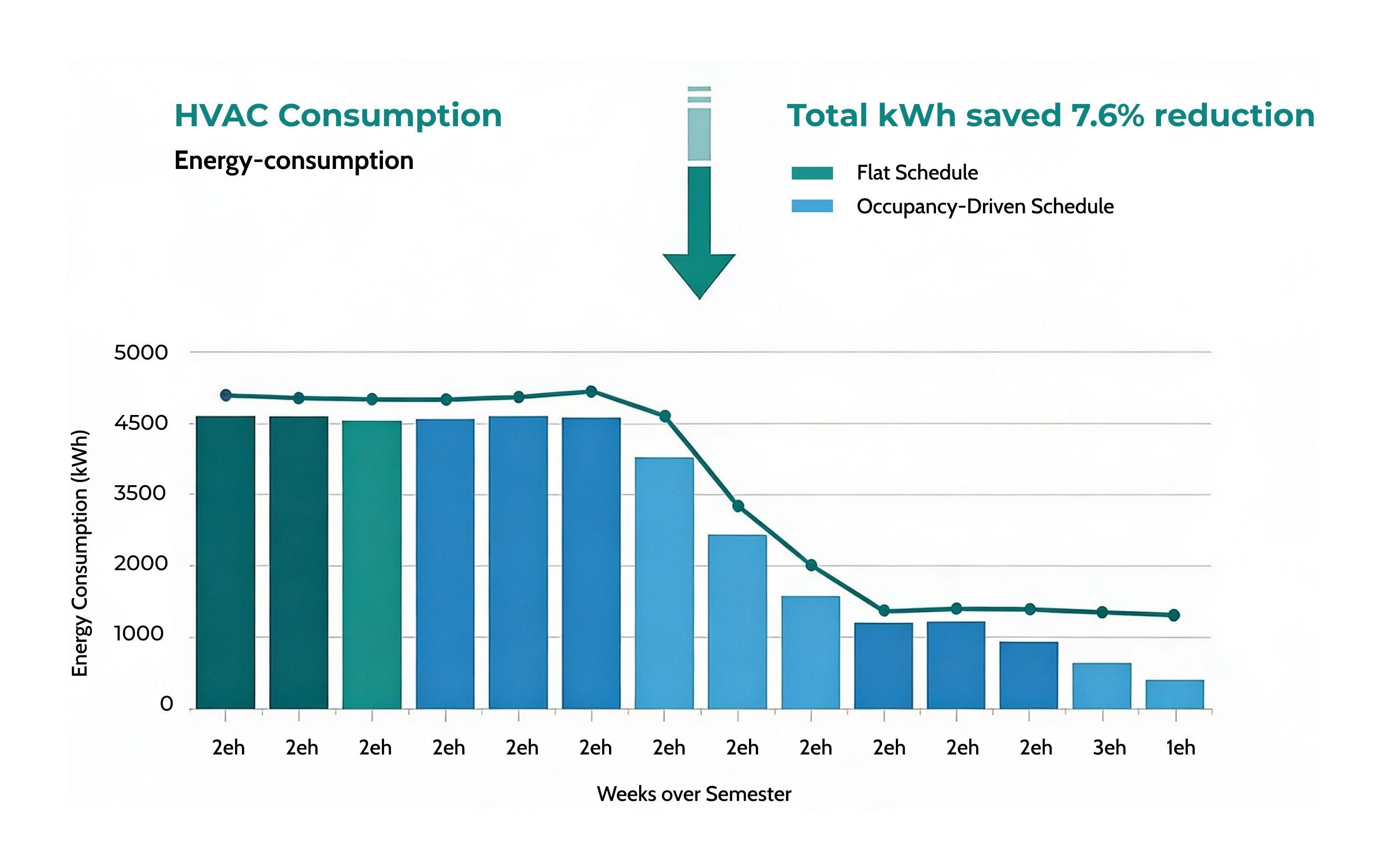
Federal sustainability executive orders require agencies to reduce energy intensity and carbon emissions in federal buildings. Occuspace connects real-time occupancy to building management systems — enabling provable energy reductions that meet EO requirements.
SCIF-Compatible by Design
Built for Environments Where Security Isn't Optional
Federal environments impose requirements that eliminate most occupancy sensing solutions from consideration. Occuspace's architecture was designed from day one to meet these requirements — not retrofitted to comply with them.
No Cameras — Period
Occuspace sensors use passive BLE/Wi-Fi scanning and mmWave radar — zero imaging, zero video. Nothing to capture, store, or compromise. Eliminates camera-prohibition conflicts in SCIFs, secure conference rooms, and sensitive agency environments.
Portfolio Right-Sizing
Make Every Lease Renewal a Data-Backed Decision
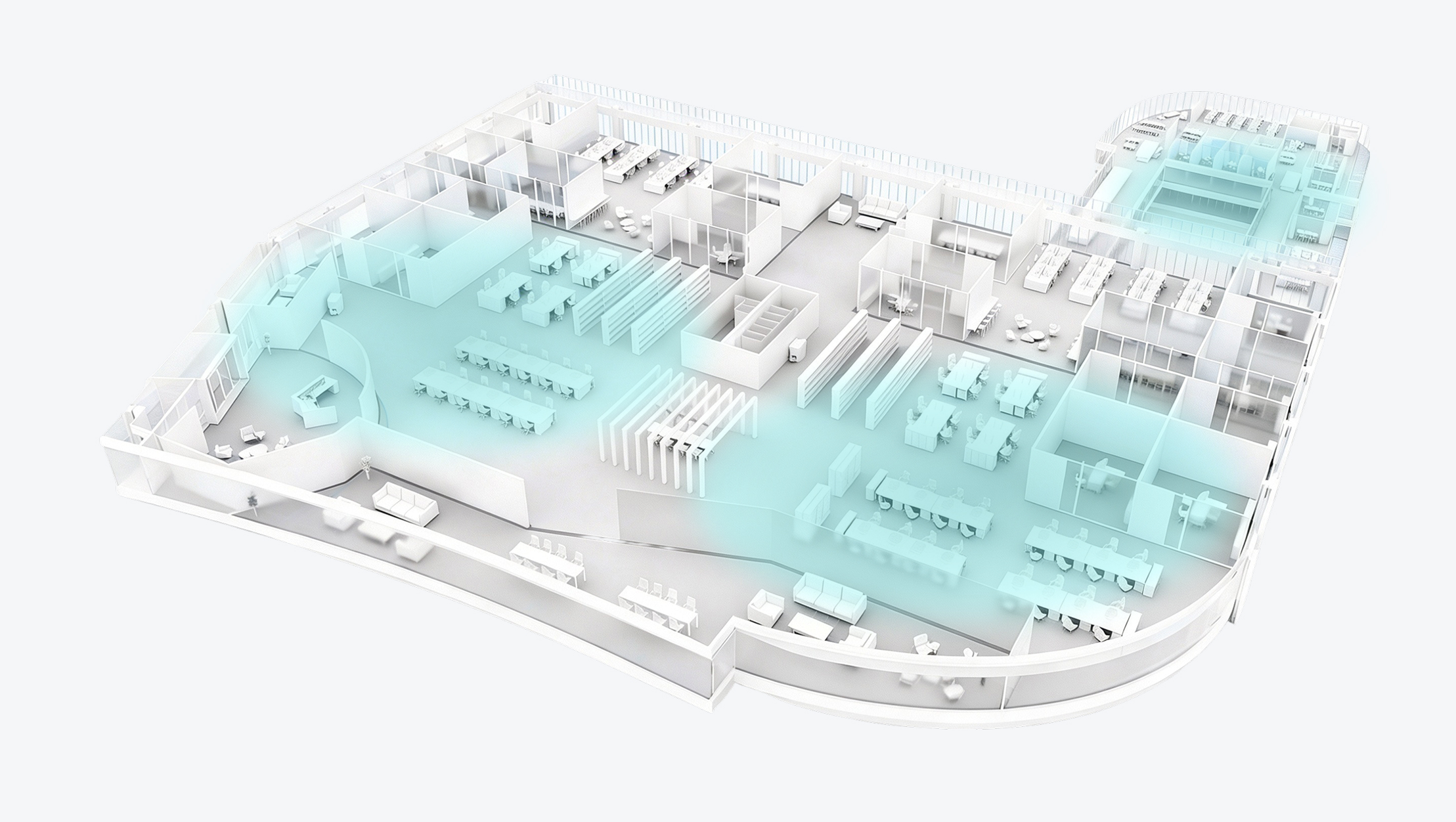
The biggest leverage point in corporate real estate is the lease event — renewal, reduction, relocation, or consolidation. Most organizations arrive at these moments with anecdotal evidence and badge-reader data. Occuspace gives you continuous, accurate utilization data that tells you exactly what you actually need — weeks before you need to decide.
Continuous utilization data by building, floor, zone, and space type
Peak vs. average occupancy to understand real capacity requirements
Identify floors or buildings to consolidate, sublease, or vacate
Benchmark your utilization against industry norms to know if you're over-leased
Exportable reports formatted for lease negotiation and board review
Workplace Strategy & Design
Stop Designing for How You Wish People Used the Office.Design for How They Actually Do.
Space Type Analysis
Which Spaces Actually Drive People In?
Your employees are voting with their feet every day. Occuspace tells you which space types — collaboration zones, focus rooms, social hubs, touchdown areas — attract people and drive dwell time. Use that intelligence to inform your next redesign, not repeat the last one.
Utilization and dwell time by space type and zone
Identify which amenities correlate with higher in-office attendance
Measure the impact of a redesign with before/after data
Replicate what's working across your portfolio
Meeting Room Optimization
Ghost Reservations Are Costing You More Than You Think
Industry data suggests 20–35% of all meeting room reservations are ghost bookings — rooms reserved but never actually occupied. For a 100,000 sq ft office, that's tens of thousands of dollars in real estate costs attributed to rooms that sit empty. Occuspace tracks actual presence, not just calendar events, so you can quantify the problem — and fix it.
Track booked vs. actual occupancy for every meeting room
Identify chronic no-shows and set auto-release thresholds
Right-size meeting room inventory: fewer large rooms, more small ones?
Integrate with your room booking system to close the loop
Neighborhood & Team Planning
Allocate Neighborhoods to Teams, Not to Org Charts
In a hybrid world, team neighborhoods are no longer static. Occuspace shows you which teams are actually coming in — when, how often, and in what numbers — so you can allocate neighborhoods to the teams that will actually use them, on the days they'll actually be there.
Zone-level occupancy correlated with days of the week
Understand which teams overlap in the office (and when)
Optimize desk ratios per neighborhood based on actual attendance
Support hybrid policy decisions with utilization evidence
Reporting to Leadership
The Numbers Your CFO, CHRO, andBoard Actually Want to See
Workplace data is only valuable if it translates into the language of business: cost per seat, utilization ROI, employee experience scores. Occuspace connects occupancy data to the metrics that drive real estate investment decisions at the executive level.
For the CFO: Cost Per Seat & Lease Efficiency
Translate utilization data directly into cost metrics: cost per utilized seat, wasted square footage cost, and projected savings from proposed lease reductions. Give Finance the numbers they need to approve real estate changes.
For the CHRO: Employee Experience Evidence
Connect space utilization to employee experience outcomes. Show which space investments drove increased attendance, which redesigns improved dwell time, and how the workplace is evolving in response to employee behavior — not just HR surveys.
For the ESG Committee: Sustainability Metrics
Occupancy-driven building operations reduce energy consumption significantly. Document the energy efficiency gains from connecting HVAC and lighting to real-time occupancy — and report measurable carbon reductions as part of your ESG disclosure.
For the Board: Portfolio Strategy Support
When the board asks about real estate efficiency or return-to-office strategy, have an answer backed by 12 months of data rather than a quarterly headcount survey. Occuspace data supports both tactical lease decisions and long-range portfolio strategy.
By the Numbers
What CRE Teams Get Back

30–40%

Typical real estate cost reduction

3–5×

Lower TCO vs. alternative solutions

1M+

Sq ft deployed in a single day

0

Cameras. Zero. Privacy-first always.
Fits Into Your Existing Stack
Your IWMS Didn't Come With Occupancy Data. Now It Can.
Occuspace integrates with the tools corporate real estate teams already use — IWMS platforms, desk booking systems, space management software, BMS, and BI tools — so occupancy data flows into the workflows you've already built.
IWMS / CAFM integration: push utilization data into your space management platform
Desk booking systems: close the loop on reservations with actual presence data
Building management systems: occupancy-driven HVAC and lighting automation
BI and reporting tools: API access to raw occupancy, traffic, and dwell data
Digital signage: live availability feeds for wayfinding and space discovery
Explore the API
" We were paying for 40,000 sq ft more than we needed. Occuspace gave us 6 months of utilization data to bring into our lease renewal. We reduced our footprint, cut our real estate cost by 32%, and our employees actually use the space better now — because we redesigned it around what they actually do. "
VP, Corporate Real Estate
Global Technology Company
News & Insights
Resources
Company
About Us
Contact
Careers